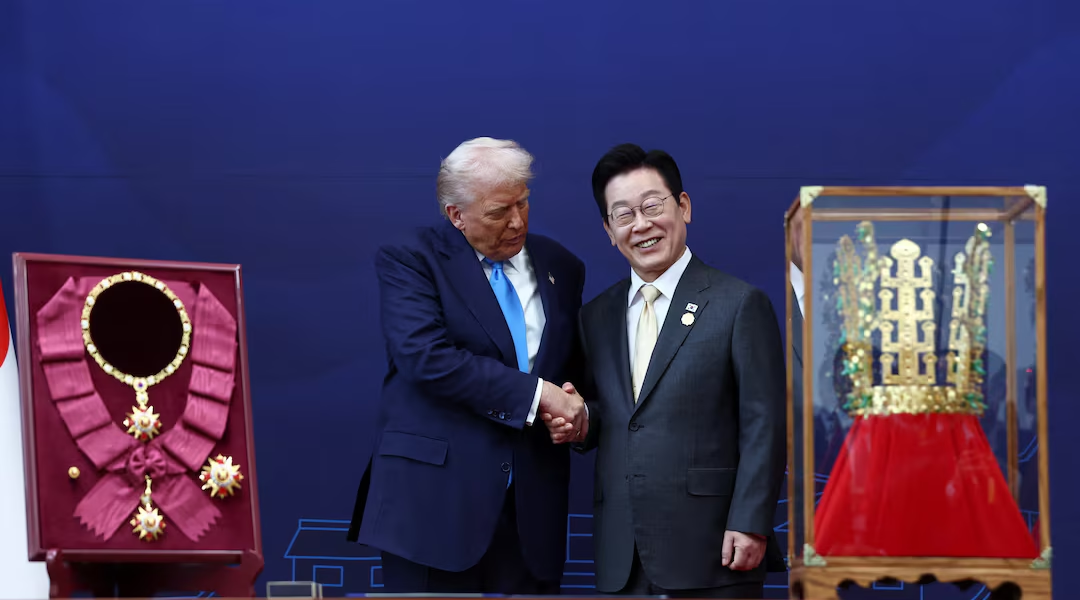

The Trump South Korea trade deal outlines tariff cuts, tech cooperation, and market access. Here’s what both nations agreed on.
Key Points Summary
- Trump announced a trade deal with South Korea during his Asia trip.
- The agreement includes tariff reductions, technology cooperation, and market access provisions.
- Analysts note the deal may strengthen US-Korea ties while balancing China’s influence.
- South Korea gains more certainty for exporters and supply chains.
- The agreement could influence future talks with China and other Asian partners.
Agreement Announced During Asia Trip
The Trump South Korea trade deal was confirmed during President Donald Trump’s visit to Asia. Standing with South Korean officials, Trump described the agreement as a “breakthrough.” According to The Standard, the announcement was part of a broader diplomatic effort in the region. Full Story via the Standard
Main Provisions of the Trump South Korea Trade Deal
The Trump South Korea trade deal includes three primary areas:
- Tariff Adjustments: Lower duties on automobiles, agricultural goods, and certain high-tech components.
- Technology Cooperation: Collaboration in semiconductors, clean energy, and digital trade.
- Market Access Rules: Provisions on intellectual property, digital trade, and fair competition.
These measures are intended to expand trade opportunities and provide clearer rules for businesses in both countries.
Implications for the United States
For the US, the Trump South Korea trade deal provides expanded access for agricultural exports and potential benefits for technology supply chains. It also demonstrates continued US engagement in Asia, a region where trade competition is significant.
Implications for South Korea
For South Korea, the agreement offers greater certainty for exporters, particularly in the automotive and electronics sectors. It also reinforces South Korea’s role in global semiconductor supply chains, an area of growing importance.
Regional Context
The Trump South Korea trade deal comes ahead of Trump’s expected meeting with Chinese President Xi Jinping. While the agreement is bilateral, analysts suggest it may strengthen the US position in broader regional trade discussions. South Korea’s close economic ties with both the US and China mean the deal could influence its future trade strategies.
Market and Industry Reactions
Initial market responses were modest but positive. South Korean technology and automotive stocks saw slight gains, while US agricultural groups welcomed the potential for increased exports. Some industry representatives, however, noted that certain trade imbalances remain unresolved.
Expert Observations
Trade analysts highlight several points:
- The deal may provide moderate economic benefits for both nations.
- It reinforces the US-South Korea alliance in trade and technology.
- It addresses supply chain concerns in semiconductors and clean energy.
- It could serve as a model for future US agreements in Asia.
Next Steps
Both governments have indicated that discussions will continue to monitor implementation and address disputes. Trump suggested the agreement could connect with broader Asia-Pacific frameworks, though details remain limited.
The Trump South Korea trade deal represents a step toward closer economic cooperation. While its long-term impact will depend on implementation and future negotiations, it provides a framework for continued engagement between the two countries.
FAQ Section
Q1: What is the Trump South Korea trade deal? It is a bilateral agreement covering tariffs, technology cooperation, and market access between the US and South Korea.
Q2: Why is the Trump South Korea trade deal important? It strengthens economic ties, supports supply chains, and provides clearer trade rules.
Q3: How does the deal relate to China? The agreement precedes Trump’s meeting with Xi Jinping and may influence regional trade dynamics.
Q4: Who benefits most from the deal? US farmers, South Korean automakers, and both nations’ technology sectors are expected to benefit.
Q5: Could this deal affect other countries? Yes, it may encourage other Asian economies to consider similar agreements with the US.
Back links:
In Other Stories: