The iQOO 15 periscope telephoto camera review looks at its real strengths, hidden trade-offs, and how its 3× optical zoom compares to other cameras in 2025.
In 2025, smartphone photography is no longer about “more megapixels.” The battlefield has moved to specialized lenses that offer a range of options: ultrawide for dramatic landscapes, primary sensors for everyday clarity, and telephoto modules for subjects that are too far away for a casual shot.
The iQOO 15 has a 50 MP periscope telephoto camera that adds to the struggle. The smartphone is marketed as a mid-range flagship and seeks to offer high-end zoom functions at a lower price. But the question is simple: can a 3× optical telephoto in this price range make a real difference?
This review of the iQOO 15 periscope telephoto camera looks at its specs, claimed performance, and how it compares to more well-known competitors.
Thoughts on the Design and Hardware
The design is mostly made up of the back camera housing at first glance. The periscope telephoto sensor is a square cutout next to the main and ultra-wide sensors. Together, they make up a triple 50 MP configuration.
This design choice is useful because it shows that the camera is focused, but it also makes a hump. The phone rocks a little on flat surfaces, which may annoy people who want a flush back. The build quality is good generally, and the grip is a little boxy, which is a pattern observed in flagship phones from 2025.
It’s apparent what the focus is: this phone is selling itself as much on looks as on performance.
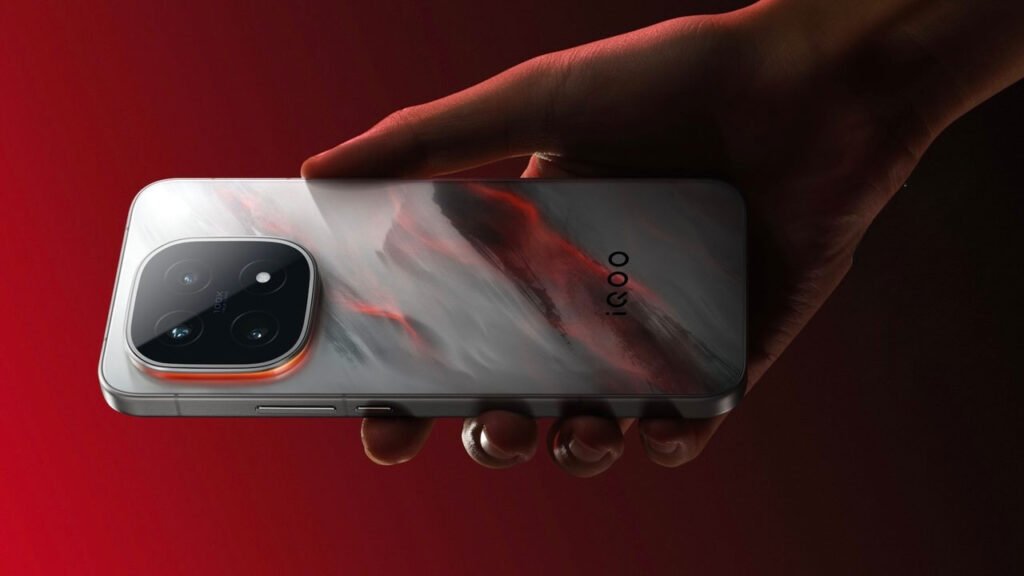
Specs for the telephoto camera
The iQOO 15’s periscope telephoto camera has a 50 MP sensor and a focal length that is about the same as 60 mm. The setup has:
- 3× zoom with optics
- 100× digital zoom limit (but acceptable photos are restricted to about 20×)
- OIS, or Optical Image Stabilization
- AI improvements for zoomed-in shots in low light
- There are two more 50 MP cameras, the primary and the ultrawide, that help keep things balanced across the system.
It seems like the decision to have the same number of megapixels on all three lenses was made on purpose. It doesn’t have the marketing gimmicks like “2 MP macro” or “depth” sensors that are often included. But numbers alone don’t tell the whole story; processing and stability are what really matter.
Telephoto in Real-World Scenarios
Official samples and leaks might give you an idea of how well something works, but context is very important.
At 3× optical zoom, pictures seem clear, with text that is easy to read and edges that are clear on things that are far away. There is no visible noise in street signs, architectural elements, or figures that are far away. But color tuning tends to make everything too bright, especially reds and blues. Some people might like how bright it is, while others could think it looks fake.
When you zoom in any more—10× digital—you can still get useful results, but the texture detail is less clear. Beyond 20×, everything get less distinct, and surfaces look more like smudges than patterns. The much-hyped 100× promise seems more like a marketing gimmick than a useful tool.
People and Portraits
At 3×, focal compression helps faces look more real than wide-angle portraits. Early photos show that the subject is well-isolated, but edge detection can fail on backdrops that are hard to see, such hair strands against greenery.
How well it works in low light
Low light is frequently what sets real telephoto cameras apart from fakes. OIS helps keep things clear in the iQOO 15, so handheld night images stay rather crisp. You can see the noise, but it’s not too much. Fine detail isn’t as good as it is on more expensive competitors like the Vivo X100 Pro, but the results are still rather good for what it is.
Stabilization
At 20× digital zoom, OIS is quite important. Without it, even small hand shakes would probably make pictures blurry. Early tests show that stabilization works well enough for cityscapes and moving cars using it. At very long distances, say 50× or 100×, stability is more of a symbol than a useful feature.
Pros and Cons of the Telephoto
Pros: ✔️ Real 3x optical zoom (not a computer cut) ✔️ OIS makes zoom photography possible at low levels ✔️ A balanced triple 50 MP system adds credibility ✔️ Portrait focal length helps faces look real Should cost a lot less than Samsung’s Ultra line
Cons: ❌ The boast of 100× zoom is typically not useful ❌ Tendency to have too many bright hues There is no changing optical range, only a fixed 3× zoom. The big camera bump can disturb some people.
People who should use it
✔️ People who want optical zoom for vacation or candid photography ✔️ People who want premium-like zoom capabilities without paying premium flagship costs ✔️ People who like crisper portrait images from a distance
Who might not find it helpful?
❌ Those who need very high zoom (8×–10× optical) performance People who are happy with just the primary and ultrawide lenses Minimalists who don’t like big camera housings
Comparing to Other Phones:

Frequently Asked Questions
Does the iQOO 15’s telephoto camera have OIS?
Yes, OIS is there, and it seems to work well up to about 20× digital zoom.
How far can you zoom in?
Officially 100× digital, however clarity drops a lot at 20×.
Is the telephoto lens appropriate for taking pictures at night?
OIS and AI processing make night zoom better, but the details aren’t as good as those of more expensive competitors.
When will it be out in the Philippines?
Reports say that it will be out in late 2025 and will be priced between Samsung and Vivo’s mid-range phones.
Decision
The review of the iQOO 15 periscope telephoto camera shows a lens that is a good deal for the price. A real 3× optical telephoto lens with OIS lets you take sharper pictures and useful zoom photos without spending a lot of money on a high-end flagship lens.
Its flaws—color intensity issues, a big bump, and the marketing number of 100× that is way too high—do not take away from its strengths. This is a good choice for people who want a balanced camera system without extra sensors.
4.3 out of 5 stars
There may not be a big change in telephoto shooting with the iQOO 15, but it does give a mid-level audience more stability and optical reach.
About the Author
Written by Jo Parr, a trader and freelance writer who focuses on technology. When I write reviews, I try to find a mix between specs and context so that readers can decide if a device’s features are important for everyday use.
Other Articles that you might like to read: