
Panama’s 2026 World Cup Dreams Face a Test After 1-1 Draw With Guatemala
Panama’s quest for a spot in the 2026 World Cup hit a precarious turning point on Monday night as the national team settled for a 1-1 draw against Guatemala at the Rommel Fernández Stadium in Panama City. While the result keeps Panama in contention, it also underscores the need for sharper finishing, tactical adjustments, and consistency as Concacaf qualifiers heat up.
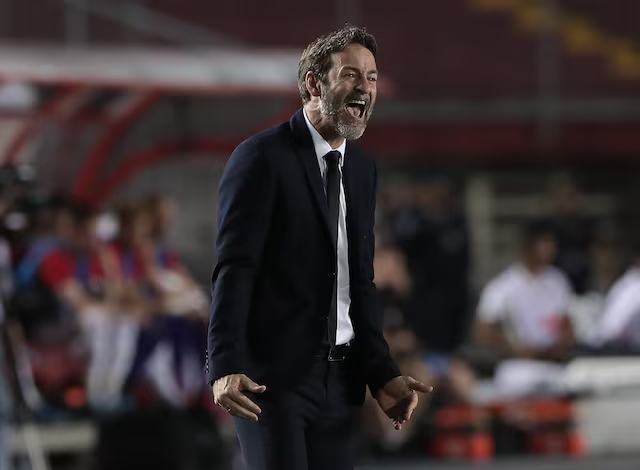
Under Danish coach Thomas Christiansen, Panama approached the match with intensity, hoping to claim three points at home. After an opening-round result that left fans cautious, Christiansen’s side knew that dropping points could have serious implications in Group A.
First Half Drama and Tactical Play
From the opening whistle, the match was a tactical duel. Panama maintained 60% possession, patiently probing Guatemala’s defense with short passes and overlaps down the flanks. Erick Davis and Luis Mejía orchestrated much of Panama’s attacking flow, attempting to stretch the Guatemalan backline and create space for strikers.
However, Guatemala proved dangerous on the counter. At the 34-minute mark, Oscar Santis received a perfectly timed pass from Arquímides Ordóñez, evaded his marker, and finished clinically past Panama’s goalkeeper Luis Mejía. The goal silenced the home crowd and gave Guatemala a psychological edge.
Panama responded swiftly. Just three minutes later, Carlos Harvey rose above defenders to head in a corner delivered by Eric Davis from the left flank. The equalizer highlighted Panama’s strength in set-piece execution and reignited the stadium atmosphere.
Despite the draw, the first half showcased Panama’s dominance in possession (64%) and passing accuracy (82%), yet their inability to break down a disciplined Guatemalan defense revealed areas needing improvement.
Second Half: Missed Chances and Key Player Performances
The second half saw Panama intensify their offensive pressure.
- Eric Davis was a standout, repeatedly overlapping down the left wing, delivering dangerous crosses, and connecting with Harvey and Juriel Cedeño.
- Carlos Harvey, beyond his goal, contributed defensively, winning crucial duels in midfield and transitioning play from defense to attack.
- Juriel Cedeño had multiple shots from inside the box but lacked the precision to convert Panama’s sustained possession into goals.
Guatemala’s defense, led by captain José Morales, remained resilient. Their compact shape limited Panama’s central penetration, forcing wing play and long-range efforts that struggled to trouble goalkeeper Ricardo Jerez.
Christiansen attempted tactical substitutions to create fresh attacking dynamics, introducing winger Jairo González and midfielder Gabriel Torres, hoping to exploit gaps in Guatemala’s fatigued backline. While the moves created opportunities, they were ultimately unconverted, leaving the scoreline at 1-1.
Tactical Analysis
Panama’s approach emphasized wide play and possession control, but a lack of clinical finishing defined the match. Key tactical takeaways include:
- Set-Piece Efficiency – Panama showed proficiency on corners and free-kicks, with Harvey’s header as proof. More precision in timing and delivery could turn tight matches into wins.
- Counter Vulnerability – Guatemala’s lone goal came from a fast counterattack, highlighting the need for tighter defensive transitions when losing possession.
- Midfield Control – Panama dominated ball possession but struggled to penetrate the 18-yard box with creative combinations, signaling the need for more incisive through-balls and movement off the ball.
Other Group A Action
Suriname’s surprising 2-1 victory over El Salvador earlier added tension to the group. Radinio Balker and Dhoraso Klas scored decisive goals, while El Salvador’s only response came from an own goal by Anfernee Dijksteel. With Suriname leading the group and Guatemala close behind, Panama faces a high-pressure path to secure qualification.
Looking Ahead
Panama’s next match is an away fixture against El Salvador on October 10. The same day, Suriname hosts Guatemala, setting the stage for a pivotal round that could reshape Group A. Coaches will need to refine strategies, enhance finishing, and address defensive lapses if Panama is to keep its World Cup dreams alive.
Despite the challenges, the team’s resilience, tactical awareness, and flashes of attacking brilliance offer hope. Fans will be watching closely as Panama aims to turn promise into results in the coming matches.
FAQ Section
Q1: What is the Concacaf World Cup Qualifier?
It’s a tournament where teams from North, Central America, and the Caribbean compete for spots in the FIFA World Cup.
Q2: Why is Panama’s draw against Guatemala significant?
The tie complicates Panama’s path to direct qualification, making upcoming matches critical for securing points.
Q3: How did Panama’s players perform in the match?
Eric Davis and Carlos Harvey stood out with their contributions in attack and defense, while Juriel Cedeño showed promise but struggled with finishing.
Q4: What tactical lessons can Panama learn from this match?
Panama needs more precise finishing, better transitions after losing possession, and creative midfield penetration to convert chances into goals.
Q5: Where can fans follow Panama’s World Cup 2026 journey?
Updates are available through official football federation sites, sports news portals, and live broadcasts of Concacaf matches.
Conclusion
Panama’s 1-1 draw with Guatemala may have complicated their World Cup 2026 path, but it also highlighted the team’s determination, resilience, and moments of brilliance. With key players stepping up and tactical lessons learned, the squad has a clear roadmap to improve and secure crucial points in upcoming matches. Fans can remain optimistic—if Panama sharpens its finishing and stays focused, the dream of returning to the World Cup stage is still very much alive. The journey continues, and every match from here will be a test of character, skill, and heart.