Check out the rumoured specs and review of the Huawei Mate 80, which has a powerful AI-driven camera, a Kirin 9010 CPU, HarmonyOS NEXT, and a new look. Is this the biggest step Huawei will take in 2025? Find out how it could change the way you use your phone.
Let’s be honest: smartphone weariness is a genuine thing.
Every new model promises “revolutionary upgrades,” but most of the time they just feel like déjà vu with glass that is a little shinier. People keep looking for longer battery life, clearer pictures, and smoother performance, yet they are always let down by small adjustments.
Have you ever observed that your “next-gen” phone doesn’t feel much different from the one you had before? The thrill wears off quickly, and what was supposed to be a big step forward typically turns out to be merely a short hop.
And for lovers of Huawei, that sentiment has even stronger. After years of innovation held back by chip and ecosystem boundaries, many people wondered if Huawei could ever really come back.
And the worst part? Most “flagship killers” now days look, act, and age the same way.
A strong processor here and a 200-megapixel camera there, but in real life, those specs typically break down because of thermal throttling, bad optimisation, or too much software.
It seems like manufacturers care more about numbers than enjoyment. They keep adding lenses, yet the corners of portraits still blur. They raise refresh rates, but the battery dies in the middle of your workday.
For people who love Huawei, the frustration is even worse. The firm that used to be known for making the best cameras with its Leica partnerships and amazing low-light images suddenly had to catch up in worldwide markets. Even the most devoted users were hesitant because of app limitations, chipset prohibitions, and ecosystem isolation.
It seems like the world moved on, leaving Huawei’s brilliance behind a political wall.
But admirers never gave up hope. Every leak and rumour about a new Mate series makes many ask the same thing: Could this be the phone that finally puts Huawei back in the spotlight?
But what if there was a phone that not only competed, but also changed what a flagship could be?
What if a firm that sceptics had long given up on suddenly came back with a product that really does challenge the big players?
The Huawei Mate 80 is a phone that could be the comeback story of the decade if the rumours are true.
We’re talking about a phone that combines hardware design with software freedom.
It is said that the next-gen Kirin 9010 (or 9020) CPU powers the gadget, which runs the new HarmonyOS NEXT and has one of the best camera systems ever put in a smartphone.
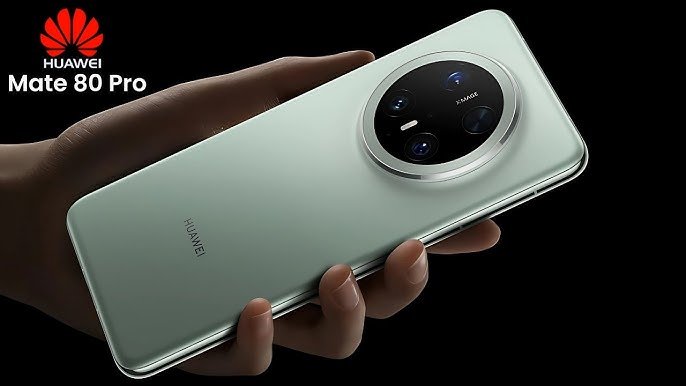
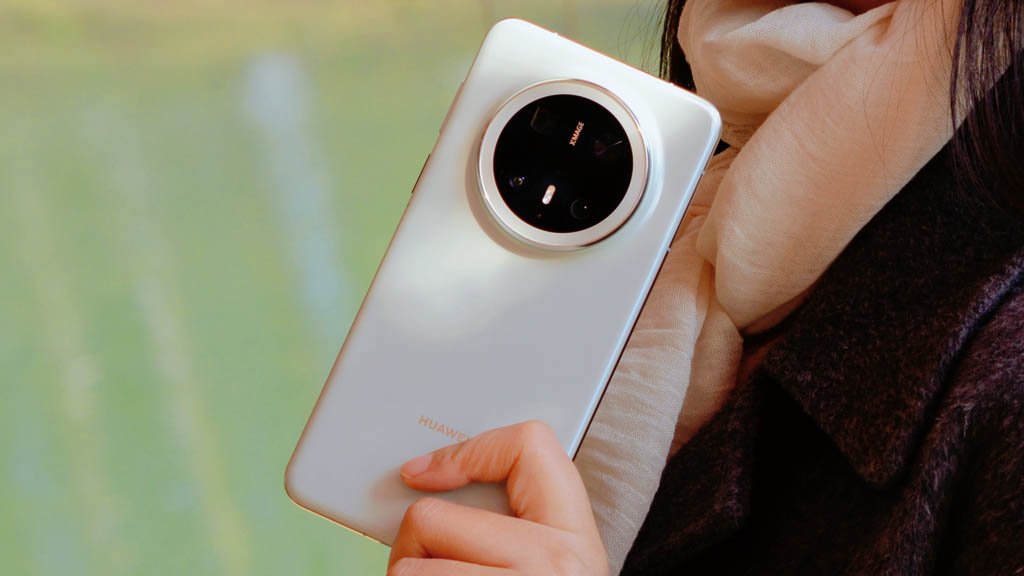
According to leaked images and information from insiders, the camera bump will be totally revamped, the lens will have a variable aperture, and AI image processing will be deeply integrated into the system—not just as a gimmick.
If this is accurate, the Huawei Mate 80 won’t just be another Android phone.
This phone could show that Huawei still has the creative power to start trends instead of follow them.
The Solution — Huawei Mate 80 Tech Review & Features
The Huawei Mate 80 does just that. It’s not just another “spec race” entry; it’s a carefully planned statement that Huawei still has the power to push innovation, even when things are tough.
Design & Build Quality
People are most interested in the new circular camera configuration, which is said to be flatter and more modern than the Mate 70’s version. Huawei seems to be using even more high-end materials, such a mix of aerospace-grade aluminum and nano-ceramic glass.
According to reports, the gadget seems thicker, more symmetrical, and balanced in the hand. This is a design change that shows Huawei’s attention to detail.
Some leaks even show a curved-edge OLED screen that keeps the immersive look that Mate fans have come to love. The bezels are almost nonexistent, and there are rumours of an under-display selfie camera for the Pro version.
Performance & Chipset
The Kirin 9010 (or maybe the 9020 for the Pro+) is at the heart of this beast.
This in-house chipset is meant to compete with Snapdragon’s newest Gen 3 series. It focusses on AI-assisted processing, thermal efficiency, and 5G performance recovery after Huawei stopped supporting full connection for a long time.
Early rumours say that the chip’s NPU (Neural Processing Unit) has been redesigned to do real-time AI picture optimisation, voice translation, and power balancing—all without needing Google’s ecosystem.
Tech sources think that in benchmark tests, performance scores might reach 1.4 million on AnTuTu, which is around the same as Qualcomm’s finest.
It’s not certain, but if that data holds up, Huawei might really be back in the high-performance game.
Camera Technology
The camera system is where the true magic might happen.
With a variable aperture primary sensor, Huawei looks set to take back its crown. This might be the only flagship phone this year to have one.
This means that the lens can automatically change how much light it lets in, going from f/1.4 for low-light images to f/4.0 for clear daylight shots.
The setup comes with a periscope telephoto and ultra-wide AI lens, making it perfect for creators, vloggers, and photographers who want every shot to have a wide spectrum of colours and clear details.
If the leaks from Huawei Central are true, the new XMAGE imaging engine uses AI-level texture mapping to make photographs look more “human-like” by balancing tone, colour depth, and light diffusion.
“Huawei might just be returning to its photographic dominance,” one analyst noted on TechNode. “The Mate 80’s rumored imaging hardware appears to merge computational photography with authentic optics.”
Battery & Charging
Huawei recognises that a premium phone needs to have stamina.
The Mate 80 series will likely include a 5,000 to 5,200mAh battery that can charge quickly over a wire at 100W and wirelessly at 66W.
Based on Mate 70 charging standards, that indicates about 50% in 10 minutes, which is remarkable by any metric.
According to reports, HarmonyOS NEXT has a new AI that learns about the battery and changes performance curves based on how the user uses it. Over time, the system “learns” when to preserve energy and when to use all of its power.
Software: HarmonyOS NEXT
Forget about Android compatibility; Huawei is going all-in on its own ecosystem.
HarmonyOS NEXT is a complete break from older Android apps. Instead, it focusses on making apps that work with Huawei’s AppGallery.
At first, that might sound limiting, but Huawei has worked with thousands of developers around the world, and early reports say that the optimisation is better and the privacy measures are stronger than those of most Android skins.
This is a risky move that might either help or hurt Huawei’s return to power.
💵 Expected Price & Release
- Huawei Mate 80 (Base): around $1,099 / ₱63,000
- Huawei Mate 80 Pro: around $1,299 / ₱75,000
- Huawei Mate 80 Pro+ (Ultra): possibly $1,499 / ₱87,000
Launch rumors point to Q4 2025, just in time for the holiday flagship season.
“The Mate 80 may not just be about specs — it’s about statement,” a source from GSM Arena said.
“Huawei’s message is clear: we’re not done yet.”
Comparison – Huawei Mate 80 vs Mate 70 vs Xiaomi 15 Ultra

Analysis
The Mate 80 seems to combine Huawei’s historic design philosophy with a renewed focus on technology.
The variable aperture lens might work better than the Xiaomi 15 Ultra in mixed lighting, and the Kirin 9010’s AI-driven performance might finally close the gap with Snapdragon’s dominance.
The Mate 80 could be the first Huawei phone in years to feel genuinely complete for global use, thanks to the reintroduction of native 5G and an improved HarmonyOS NEXT.
Xiaomi’s hardware edge and larger software ecosystem still make it a good choice for hardcore users outside of China.
The Mate 80 might be the better emotional buy for people who care about privacy, identification, and photography, though.
Section 6: Pros & Cons of the Huawei Mate 80
Pros
- AI-Driven Camera Mastery—The rumoured variable aperture and XMAGE picture engine might bring Huawei back to the top of mobile photography.
- Strong In-House Chipset: The Kirin 9010 (or 9020) seems to be closing the gap with Snapdragon, focussing on AI performance and efficiency.
- HarmonyOS NEXT Optimisation: The system runs more smoothly, privacy is better, and program load times may be faster—all without Android’s clutter.
- Premium Design Evolution: With its refined symmetry, thinner frame, and futuristic camera module, this is one of Huawei’s best-looking phones yet.
- Rapid Charging & Battery AI: With 100W wired and 66W wireless charging and smart battery management, your battery will last longer and get less hot.
- Reintegration of 5G: After years of restrictions, the reintroduction of native 5G could be the turning point for Huawei’s worldwide importance.
- Unique Ecosystem Identity: HarmonyOS NEXT might help Huawei become completely independent from other brands, which would set it apart from Android clones.
Cons:
- App Compatibility Issues: HarmonyOS NEXT no longer supports Android apps, so it may not be available in other countries.
- Uncertain Global Launch: In some places, the Mate 80 might not be released at all or only partially because of trade rules.
- Price Tag: It costs about $1,099 (₱63K) to start, which is a lot of money for a phone that doesn’t work with Google services.
- Limited Developer Adoption (So Far): Huawei’s app ecosystem is getting better, but it’s still not as varied as Android’s Play Store or Apple’s App Store.
- Early Hype Factor: These are leaked specs, so some things may change before the official announcement. Be ready for surprises, good or bad.
Overall Impression
If the leaks are genuine, the Huawei Mate 80 might not simply be a competitor; it might change the whole discourse.
This device looks like it was made for artists, photographers, and tech users who value accuracy, privacy, and individuality over fitting in.
Huawei is saying, “We’re still here and we can still shake things up in the industry.”
Huawei Mate 80 – Frequently Asked Questions
- Can you use Google apps on the Huawei Mate 80? No, according to the latest news. The Huawei Mate 80 is believed to operate on HarmonyOS NEXT, which means it won’t be able to run Android or Google apps. However, Huawei is growing its AppGallery ecosystem, and popular apps like TikTok, Facebook, and Telegram are currently available through direct integration or web-based versions.
- What makes the camera on the Huawei Mate 80 so special? The camera system on the Mate 80 might be one of the best in 2025.
People say it has a main lens with a variable aperture (f/1.4–f/4.0), an AI-enhanced XMAGE imaging engine, and a periscope telephoto lens with 5x optical zoom.
This combo aims to provide you DSLR-level flexibility, with bright, clear low-light shots and cinematic bokeh control directly from your phone.
- Can the Huawei Mate 80 5G work? Yes, and that’s a major deal.
Huawei is said to be bringing back native 5G compatibility with its Kirin 9010/9020 chipset after years of limited connectivity.
That means it works with most global 5G networks, has lower latency, and quicker speeds.
- What’s new in HarmonyOS NEXT? Huawei’s operating system has been completely rebuilt with HarmonyOS NEXT.
It is meant to run Huawei apps that are optimised for its own platform instead of Android-based apps.
What is the goal? Improved security, efficiency, and ease of use across Huawei computers, tablets, and wearables.
In short, this is a big step for Huawei towards being free from Google and Android.
- What is the price of the Huawei Mate 80 in the Philippines? Prices may change based on import duties and when the item is officially available, but early estimates say: About ₱63,000 for the Huawei Mate 80 About ₱75,000 for the Mate 80 Pro Mate 80 Pro+ (Ultra) costs about ₱87,000.
Depending on the launch of the ad, local bundles may come with complimentary items like Huawei earphones or watches.
- When will the Huawei Mate 80 come out? People who work for the company think there will be a global announcement in the fourth quarter of 2025, with a restricted deployment in China initially, and then in several Asian and European regions.
If Huawei’s logistics stay the same, the Philippines launch might happen by early 2026, maybe with the Huawei P80 Lite or Nova 15.
- Is it worth it to wait for the Huawei Mate 80? The Huawei Mate 80 is worth waiting for if you want high-end technology, the best cameras in the business, and a new experience that isn’t based on Android.
But if you rely on Google apps or a large app ecosystem for your everyday job, you might want to wait till Huawei adds more apps to its AppGallery.
Conclusion:
The Huawei Mate 80 doesn’t simply want to compete; it wants to change what we think of as a flagship smartphone.
Huawei seems to be sending a clear statement with its rumoured variable aperture camera, HarmonyOS NEXT, and comeback-level 5G capability: the brand is far from done coming up with new ideas.
The Mate 80 might be the most intriguing phone to watch in 2025 for people who want the best in photography, AI-powered performance, and a new ecosystem experience. It might not work flawlessly in Google’s sandbox yet, but it’s making its own universe, one app, one lens, and one bold concept at a time.
And it might be what makes it so special.
If the leaks are true, the Mate 80 might be just as good as the iPhone 16 Pro and Galaxy S25 Ultra, but with its own unique style—sleek, bold, and shamelessly different.
Would you switch to the Huawei Mate 80 even if it didn’t work with Google?
Please leave your comments below. I’d love to know if Huawei’s bold leap makes you excited or makes you think twice.
And if you’re as interested as I am, keep an eye out for updates to this review as soon as the official specs come out.
You might also like:
- Important Differences Between the Galaxy M07 vs the Galaxy A07
- Review of the iQOO 15 Periscope Telephoto Camera: Zooming In on Usefulness