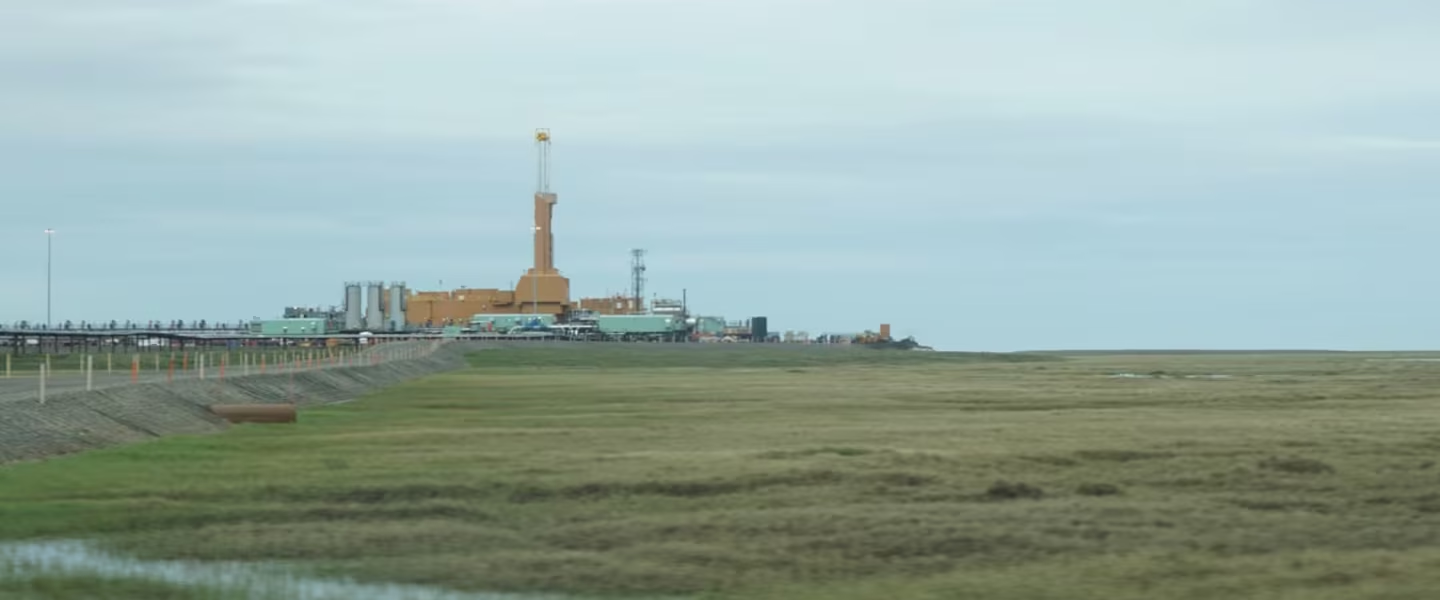

A Texas startup, Narwhal Exploration, is investing $150M to drill in Alaska’s Arctic, sparking fresh hopes for major oil reserves. Learn what’s next.
Key Points Summary
- Shell abandoned its Arctic oil leases, raising doubts about future offshore drilling.
- Narwhal Exploration, a small Texas firm, is stepping in with a $150M investment.
- Drilling will focus on West Harrison Bay, targeting the Nanushuk formation.
- If successful, it could be the first-ever oil discovery in that bay.
- Project faces logistical challenges, environmental concerns, and high costs.
- Alaska stands to benefit from royalties if development proceeds.
For years, the future of offshore Arctic oil exploration seemed uncertain. When energy giant Shell pulled out of its leases off Alaska’s North Slope, many assumed the dream of tapping into those vast reserves was over. But now, an unexpected player is stepping onto the ice.
Narwhal Exploration, a small Texas-based company, is preparing to launch one of the boldest oil exploration efforts in recent memory. This winter, the firm plans to drill up to five wells in West Harrison Bay, a remote section of the Beaufort Sea never before tapped for oil. The project carries a price tag of roughly $150 million—a massive gamble for a company far smaller than Shell.
At the heart of Narwhal’s efforts is the Nanushuk formation, a geologic structure that was once overlooked but is now producing excitement across Alaska’s oil industry. This is the same formation fueling development at ConocoPhillips’ Willow project and Santos’ Pikka project.
“Based on the geology, there’s likely something there,” said petroleum engineer Pete Stokes, who has studied the region extensively. “The real question is how large the discovery will be—and whether it can be developed economically.”
A Different Approach Than Shell
Shell first acquired leases in West Harrison Bay back in 2012 but never advanced beyond early studies. The company cited the enormous costs and the challenge of finding partners willing to share the financial risk.
Narwhal, however, has shown persistence. After multiple failed attempts to purchase Shell’s leases, the company finally seized its chance last year when Shell walked away. Through a state auction, Narwhal and a partner firm secured nearly $9 million worth of leases, including the tracts Shell once held.
High Stakes, High Costs
Even with state ownership of the submerged lands—which could streamline permitting and increase Alaska’s royalty share—developing West Harrison Bay won’t be easy. Estimates suggest building an operational oil field there could cost over $8 billion, a sum on par with Alaska’s largest projects.
The area’s remoteness also adds logistical hurdles, from transporting equipment to ensuring safe operations in icy waters. Still, some experts believe the rewards could justify the risks.
Environmental Questions Remain
As with all Arctic drilling, Narwhal’s project faces scrutiny from environmental groups. The Center for Biological Diversity has voiced concerns about potential impacts on bowhead whales, seals, and other Arctic wildlife. Federal regulators have granted Narwhal permits, allowing limited disturbances of marine mammals, but advocacy groups remain watchful.
Why This Matters for Alaska
If successful, Narwhal’s drilling would mark the first-ever wells in West Harrison Bay, potentially unlocking a new chapter in Alaska’s energy story. For the state, the project represents not just jobs and economic growth, but also a larger share of oil revenues compared to federally managed lands.
For now, all eyes are on this winter. A small firm from Texas is betting big in one of the harshest environments on Earth, chasing a discovery that could reshape the future of Alaska’s oil industry.
FAQ Section
What is West Harrison Bay oil exploration?
It’s a new drilling effort by Narwhal Exploration in Alaska’s Beaufort Sea, targeting potential oil reserves in the Nanushuk formation.
Why is this project important?
It could lead to the first-ever oil discovery in West Harrison Bay, boosting Alaska’s economy and energy output.
How can a small company like Narwhal take on such a big project?
Narwhal is raising funds through private equity partners and betting that lower costs on state-owned lands make the project more feasible than Shell’s prior attempts.
What are the benefits if oil is found?
A successful discovery could bring jobs, infrastructure investment, and higher royalty revenues for Alaska.
Where can I learn more about Arctic oil exploration?
You can follow updates from the Alaska Division of Oil and Gas, industry reports, and local news outlets covering North Slope developments.